Hail Damage Roof Repair in Dallas–Fort Worth: A Metroplex Guide to Storm Season
May 11, 2026 · 8 min read · By the LoneRidge Roofing Team
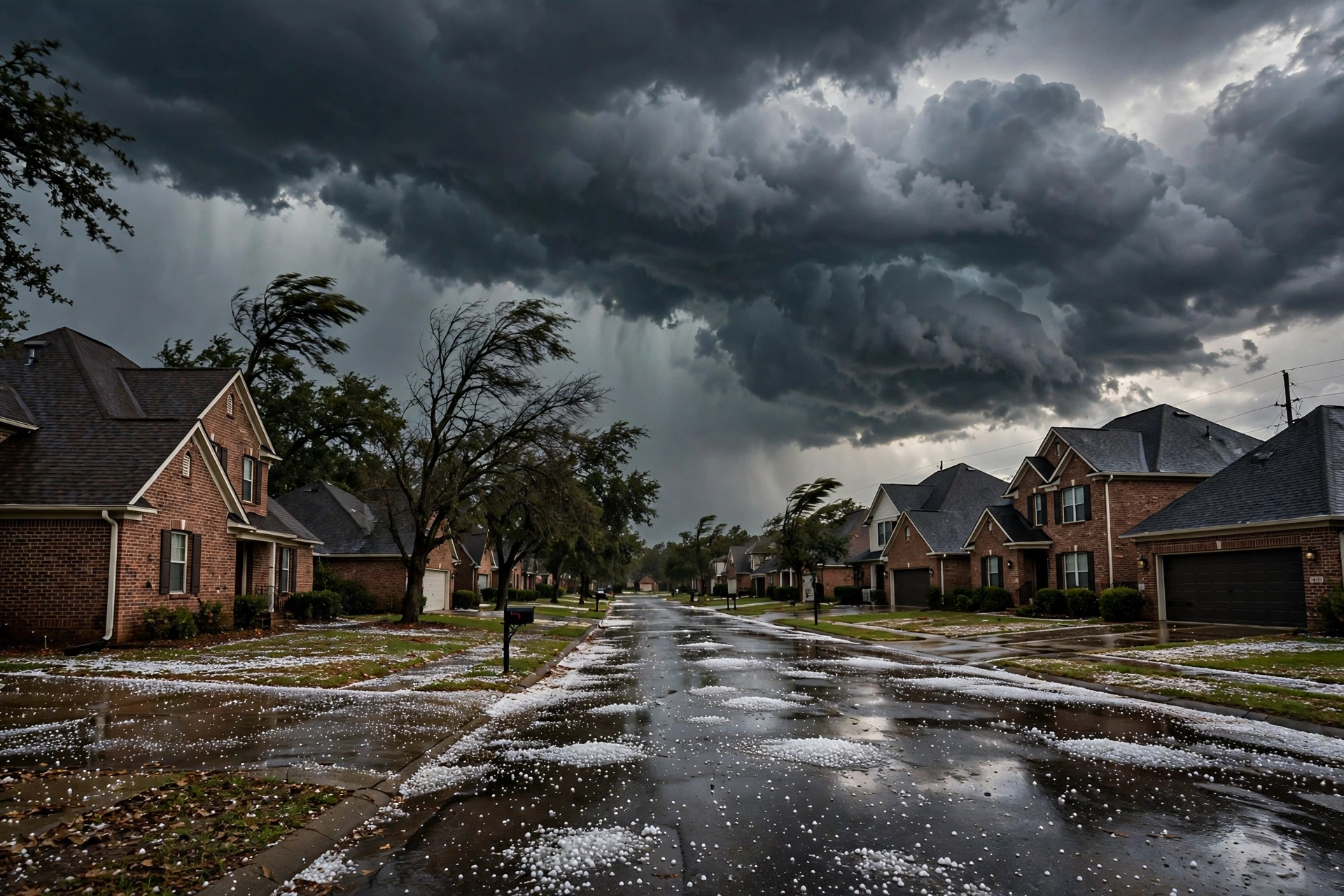
Hail in Dallas–Fort Worth is not a single-neighborhood event. A storm cell can shred roofs in one part of the Metroplex, drop only rain a few miles away, and leave two homeowners on the same street arguing about whether anything happened at all. This metro-wide guide explains how DFW hail season behaves, why your roof age and exposure change the outcome, how to document damage properly anywhere in the Metroplex, and how to choose a repair scope that fits the evidence — not the loudest sales pitch on your block.
How DFW Hail Season Actually Works
North Texas hail season peaks in spring, roughly March through June, when warm Gulf air collides with cooler systems moving across the plains. A secondary uptick can arrive in the fall. These storms are intensely local: hail swaths are often only a few miles wide, following the core of a cell as it tracks across Dallas County, Tarrant County, Collin County, and Denton County. A verified hail event in Plano does not prove hail fell in Arlington, and vice versa.
That patchiness is why storm-date documentation matters so much here. Insurers, roofers, and homeowners all rely on weather data tied to a specific address and date, not just memories of a loud night. If you hear hail on the roof, note the time, save local news or radar screenshots, and check on neighbors — not to copy their decisions, but to build an accurate picture of what your street actually experienced.
Why Neighborhood and Roof Age Change Everything
Two identical storms produce different results on different roofs. A five-year-old architectural shingle roof on a sheltered, tree-lined street in Fort Worth may shrug off hail that seriously bruises a twenty-year-old three-tab roof on an exposed hilltop in Frisco. Roof age, shingle type and thickness, slope direction facing the storm, and even attic ventilation history — heat-aged shingles are more brittle — all shape how much functional damage a given storm causes.
Metroplex housing stock varies widely, from older homes inside Loop 12 and near downtown Fort Worth to fast-built subdivisions in the northern suburbs. Newer subdivisions often have similar roof ages across whole blocks, which is why one street can see widespread claims after a storm while an older, mixed neighborhood nearby sees scattered repairs. Judge your roof by its own condition and inspection evidence, not by how many yard signs appeared on your street that week.
- ★Older and thinner shingles bruise and crack more easily
- ★Storm-facing slopes usually take the heaviest impacts
- ★Heat-aged, brittle roofs suffer more functional damage
- ★Similar-age subdivisions often show similar damage patterns
Documenting Damage Across the Metroplex
Good documentation follows the same discipline in Richardson as in Burleson. Start with a dated photo set: wide shots of each side of the house, close views of dented gutters and vents, granule piles at downspouts, and any interior stains. Add a simple written log — storm date and time, what you observed, when you noticed each sign, and any temporary steps you took. Store it digitally with backups, because weeks may pass before every conversation about the roof is finished.
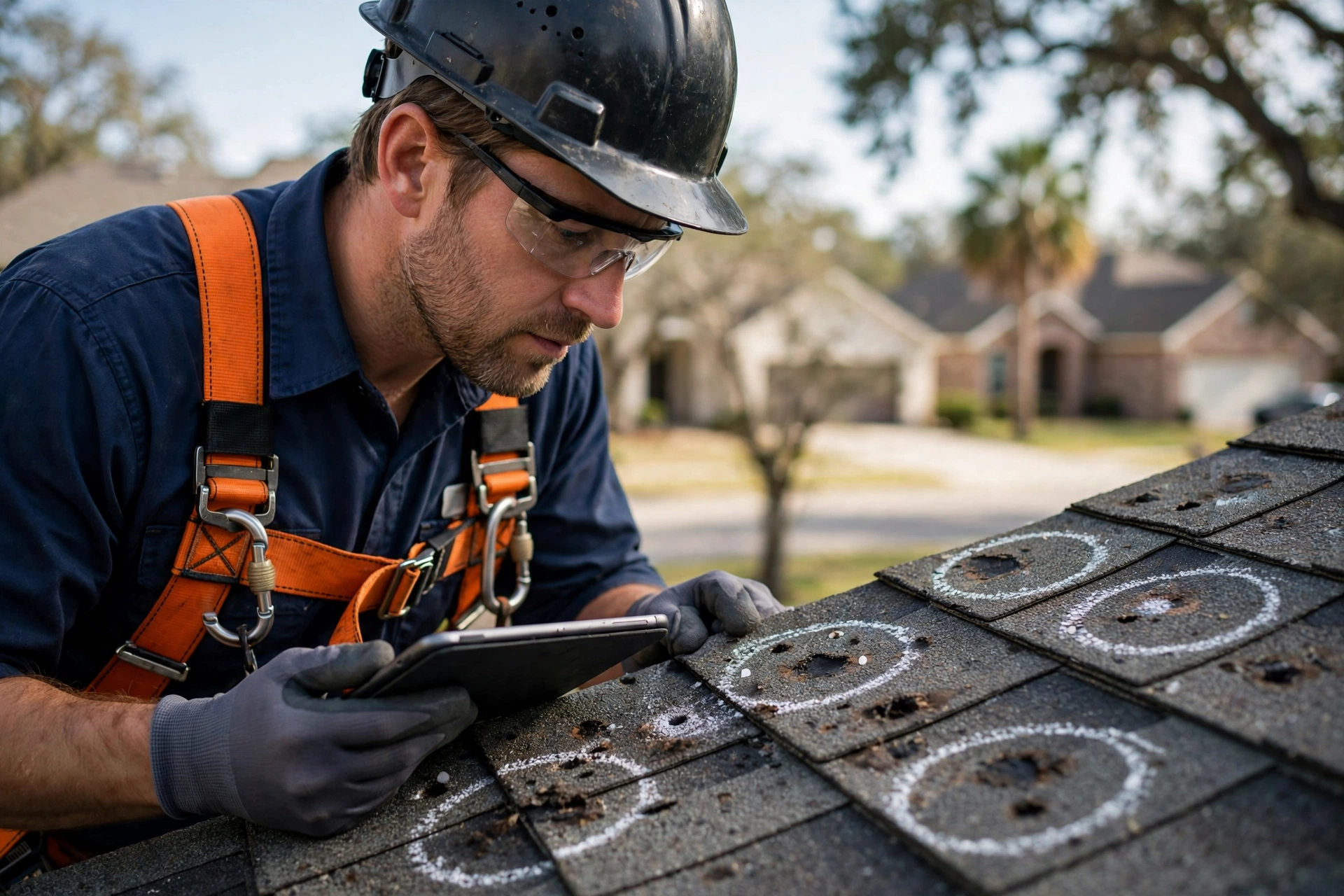
If you get a professional inspection, expect and request the same standard: slope-by-slope photos, marked test areas, and a written distinction between hail damage, normal aging, and unrelated issues like nail pops or worn flashing. That distinction matters across the Metroplex because many DFW roofs carry layered histories — a previous repair here, a prior storm there. Clean documentation keeps the current storm in focus and protects you from both under-scoped repairs and inflated claims.
Choosing the Right Repair Scope for Your Roof
Repair scope should follow damage scope. A single damaged slope with sound shingles elsewhere may need only that slope addressed. Scattered functional damage on two or more slopes, compromised valleys, or cracked mats throughout test areas points toward broader work. Beware of two extremes after any Metroplex storm: the contractor who finds a total loss on every roof, and the handyman who patches visible holes while ignoring mat damage that will fail within a season or two.
Treat these as labeled planning ranges to frame decisions, never as quotes for your specific home.
Working With Insurers in a Two-County Storm
Large DFW storms generate thousands of claims at once, and adjusters may be scheduled days or weeks out. That delay is normal, and it is another reason your own documentation matters. When the adjuster visits, share your inspection photos and storm evidence, walk the property together if possible, and take notes on what was agreed and what remained undecided. If the adjuster scope and your contractor scope differ, ask both sides to explain the difference in writing, line by line.
Texas law sets timelines for insurers once a claim is filed — acknowledgement and decision clocks described elsewhere on this site — but volume after a major Metroplex event can strain scheduling. Polite, documented follow-up works better than daily pressure. Keep every letter, email, and scope sheet. If a supplement is needed because hidden damage appears during repairs, it should be documented with photos and submitted properly rather than handled as a verbal promise.
Avoiding Post-Storm Pitfalls in DFW
The Metroplex after a big hail event attracts storm-chasing operations that set up temporary phone numbers, rent local-looking trucks, and disappear before warranty questions arise. Verify any contractor independently: a real local presence, a written contract with a full scope, material specifications in writing, and a payment schedule tied to work completed. Never pay the full amount before work begins, and never sign a contract that hands over control of your entire insurance process without clear terms you understand.
One rule identifies bad actors instantly: it is illegal in Texas for a contractor to waive, absorb, or rebate an insurance deductible. Offers to bury the deductible in the price, sign a side agreement, or inflate an invoice to cover it are unlawful. Across Dallas–Fort Worth, the contractors worth hiring compete on inspection quality, documentation, materials, and workmanship — not on promises to make your legal obligation disappear.
Not Sure What Your Roof Needs?
Get a photo-documented inspection and decide with evidence.
Questions, Answered
Not automatically. Hail swaths are patchy, and roof age, shingle type, and slope exposure differ from house to house. Your roof needs its own inspection and its own evidence. A neighbor outcome is a reason to get checked, not proof of what your roof needs or what your policy will cover.
The peak runs roughly March through June, with occasional fall storms. Damaging hail can occur outside those windows, which is why documenting the specific date of any storm at your address matters more than relying on the general season when discussing damage later.
Yes, though age complicates the picture. Older shingles are more brittle and can suffer functional hail damage more easily, while also showing wear that is not storm-related. A careful inspection separates hail impacts from aging so repairs or claim discussions address the right cause for each problem.