Commercial Flat Roof Maintenance in Dallas–Fort Worth
October 12, 2026 · 7 min read · By the LoneRidge Roofing Team
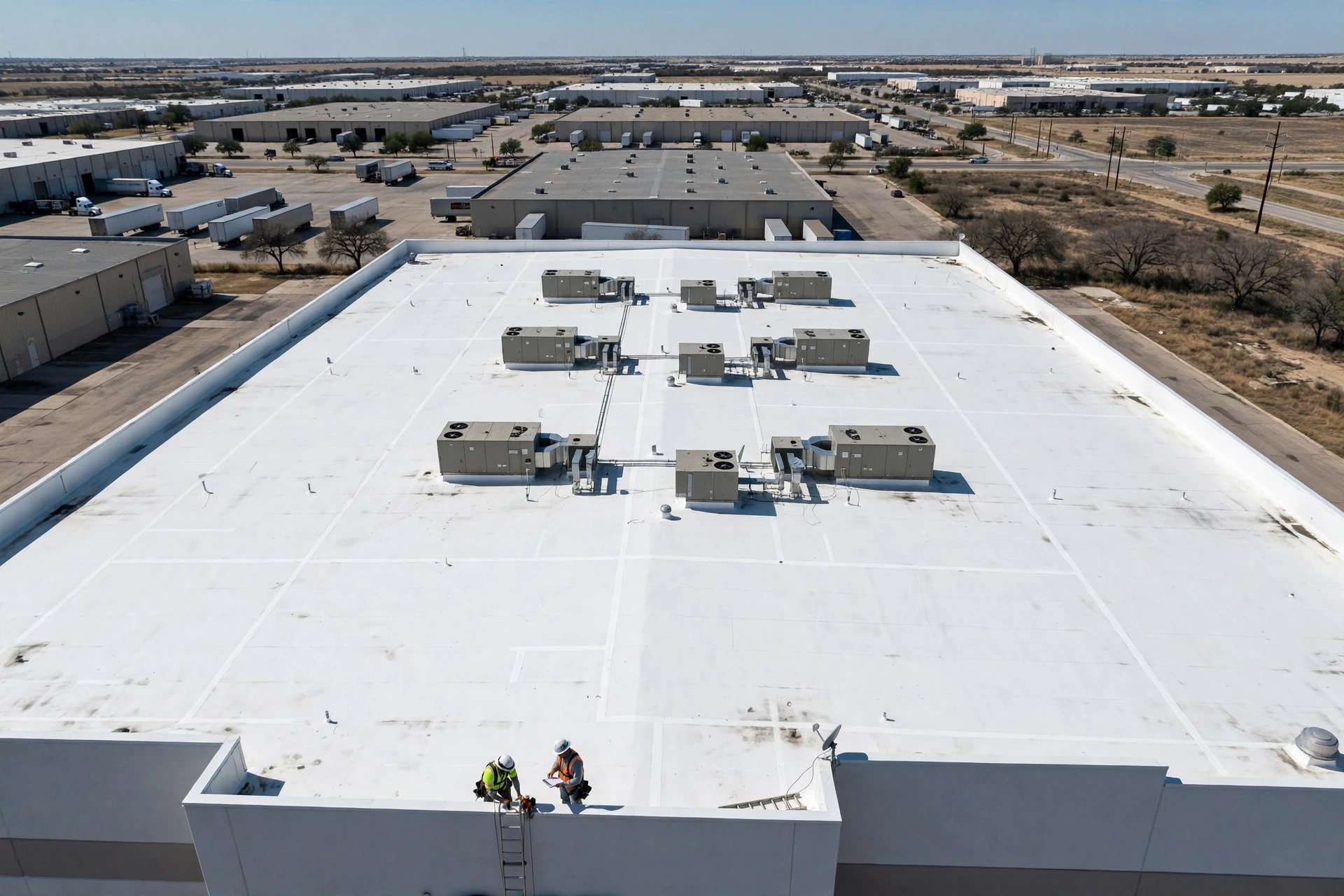
Flat and low-slope roofs fail differently from shingle roofs. Water drains slowly, seams carry most of the risk, and rooftop equipment brings foot traffic and penetrations. A simple maintenance plan catches most problems while they are still repairs.
Inspect twice a year and after storms
A good rhythm in North Texas is spring, before the main hail season, and fall, after summer heat, plus an inspection after any major hail or wind event. Each visit should end with a written condition report and photos so you have a record over time.
Keep drains and scuppers clear
Most flat-roof leaks start with water that cannot leave. Clear debris from drains, scuppers and gutters, and watch for ponding water that remains more than 48 hours after rain. Persistent ponding speeds up membrane aging and adds weight to the structure.
Check seams, flashing and penetrations
On TPO, look for open or poorly welded seams. On EPDM, check seam tape and shrinkage at the perimeter. On modified bitumen, look for blisters, cracks and loose laps. Curbs around HVAC units, pipe penetrations and parapet walls need close attention.
- ★Open or lifting seams
- ★Cracked or pulled-back flashing at curbs and walls
- ★Punctures from foot traffic or dropped tools near equipment
- ★Blisters, splits and surface cracking
- ★Wet or compressed insulation under the membrane
Manage rooftop traffic
HVAC technicians and other trades cause many membrane punctures. Walkway pads along common routes and a simple sign-in policy for roof access reduce damage.
Coatings: when they help and when they don't
A professionally applied coating can extend the life of a sound membrane and improve reflectivity. It is not a fix for wet insulation. An infrared or core-sample moisture survey should confirm the insulation is dry before a coating is considered.
When to plan a replacement
Replacement makes sense when wet insulation is widespread, the membrane is failing across the field rather than at details, or repair costs are rising year over year. Planning ahead lets you schedule work around tenants and the budget cycle.
Not Sure What Your Roof Needs?
Book an inspection and see photos of your own roof before you decide.
Questions, Answered
A well-installed TPO roof commonly lasts 15 to 25 years in Texas, depending on membrane thickness, installation quality, drainage and maintenance.
Clogged drains, sagging decking, compressed insulation or inadequate slope. Water that stands longer than 48 hours after rain should be investigated.
Often, yes. When problems are concentrated at seams, flashing and penetrations and the insulation is dry, targeted repairs or a coating can add years of service.