What Size Gutters Do Texas Homes Need?
October 10, 2026 · 5 min read · By the LoneRidge Roofing Team
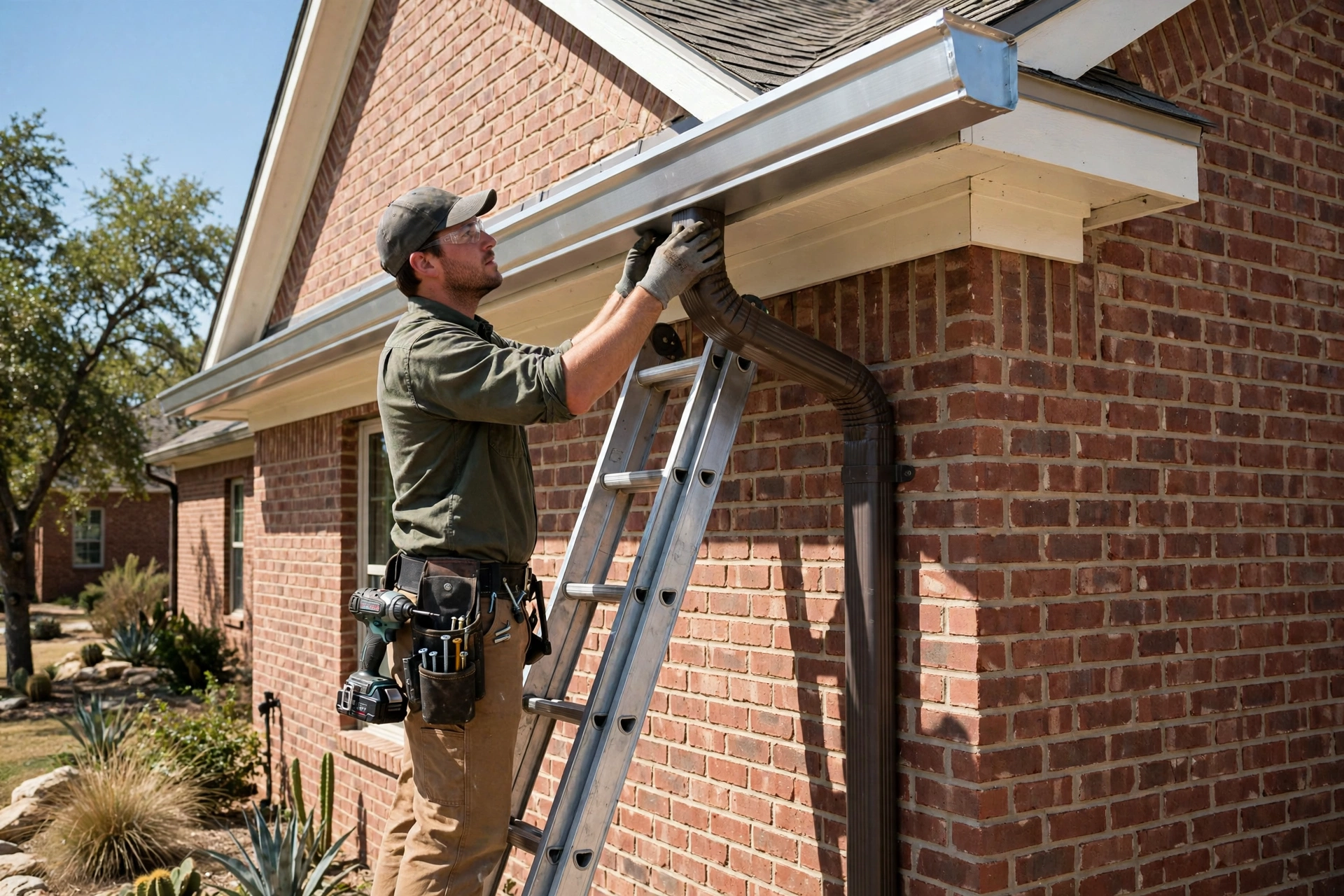
Texas storms can drop a lot of rain in a short time, and gutters decide where that water goes. Undersized gutters overflow at the corners, soak the soil next to the foundation, and stain brick and siding. Here is how to size a system that keeps up.
5-inch or 6-inch gutters?
Five-inch K-style gutters are the residential standard and handle most single-story homes and moderate roof areas. Six-inch gutters carry roughly 40% more water and are the better choice for large or steep roofs, long runs, and homes where two roof planes drain into one gutter.
Downspouts matter as much as gutters
A large gutter with too few downspouts still overflows. As a rule of thumb, plan a downspout for every 30 to 40 feet of gutter, and use 3x4-inch downspouts instead of 2x3-inch on larger roofs. Inside corners, where valleys concentrate water, often need a downspout nearby.
Protecting the foundation on clay soil
Much of North Texas sits on expansive clay that swells when wet and shrinks when dry. Concentrated runoff next to the slab makes that movement worse. Downspouts should discharge several feet from the foundation through extensions or underground drains, away from walkways and beds.
Seamless gutters
Seamless aluminum gutters are formed on site to the exact length of each run, so there are joints only at corners and downspouts. Fewer seams mean fewer leaks and a cleaner look along the roofline.
Do you need gutter guards?
Guards help most under oaks, pecans and pines that drop leaves and needles year-round. They reduce cleaning but do not eliminate it. On homes with few trees, a seasonal cleaning is often the better value.
Not Sure What Your Roof Needs?
Book an inspection and see photos of your own roof before you decide.
Questions, Answered
Seamless aluminum gutters commonly last 20 years or more with proper installation and occasional cleaning.
Not always, but a roof replacement is a good time to replace old or undersized gutters, since the drip edge and fascia are already exposed.
Usually because of too few downspouts, a clog at the outlet, or a valley sending more water to that corner than the gutter can carry.