What Size Hail Damages a Roof? A Texas Guide
October 17, 2026 · 5 min read · By the LoneRidge Roofing Team
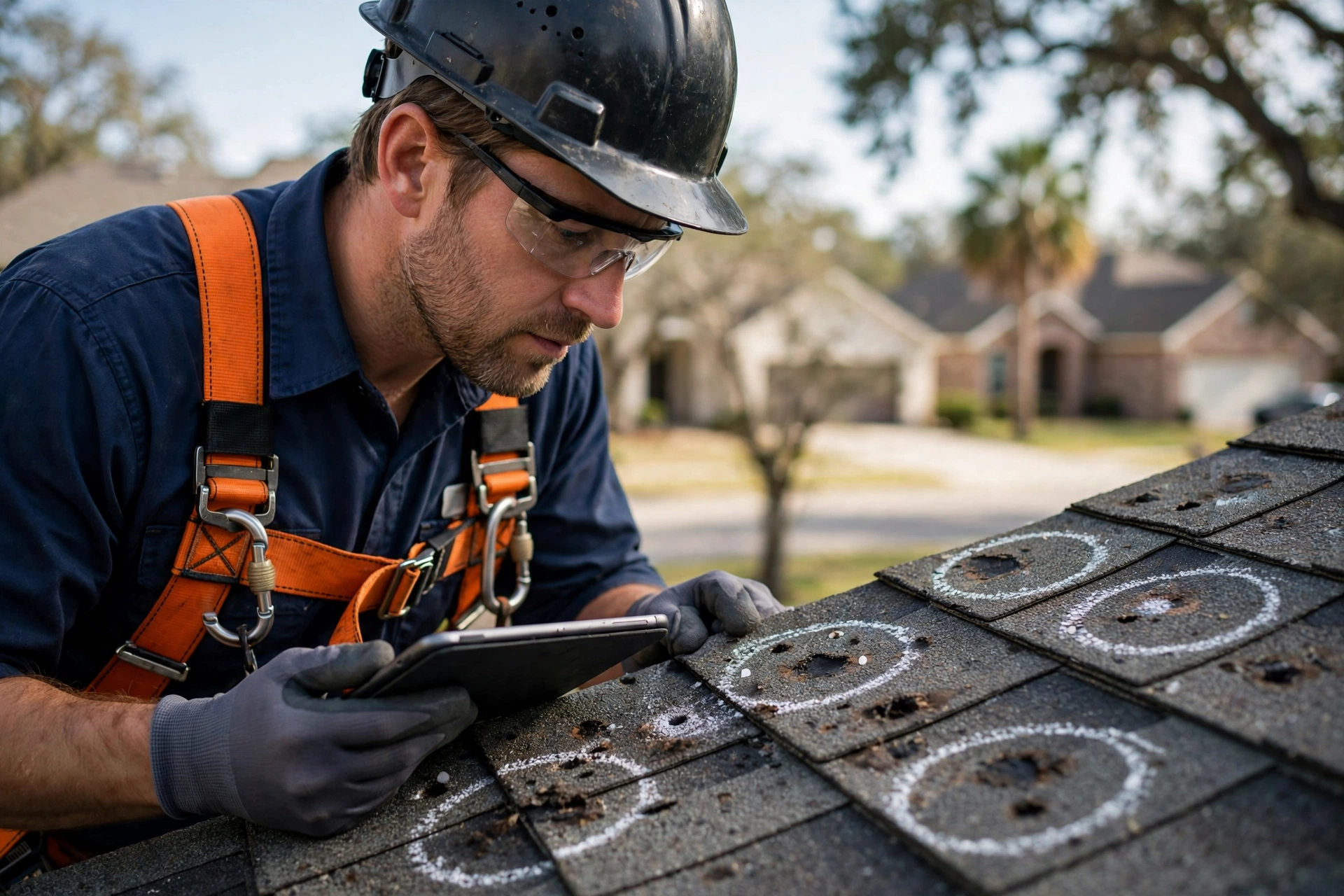
After a hailstorm, the first question is usually whether the hail was big enough to matter. Size is part of the answer, but roof age, material, wind and the angle the hail fell at matter just as much.
Hail size and typical damage
Hail around one inch in diameter, about the size of a quarter, is commonly where damage to asphalt shingles begins, particularly on older roofs. Golf-ball-size hail (1.75 inches) and larger frequently damages shingles, vents, gutters and siding.
- ★Pea to dime size: rarely damages shingles, may strip some granules
- ★Quarter size (1 in): can bruise older or brittle shingles
- ★Golf ball (1.75 in): often damages shingles, vents and gutters
- ★Baseball (2.75 in) and larger: likely to cause significant damage
Why roof age matters
New shingles are flexible and absorb impacts better. As they age in Texas heat, they become brittle, so the same hail that bounces off a new roof can fracture a 15-year-old one.
Wind and direction
Wind-driven hail hits the slopes facing the storm harder than others, which is why damage is often concentrated on one or two sides of a house.
What to check from the ground
Look for dents in gutters, downspouts and metal vents, damaged window screens, and granules collecting at downspouts. These are signs hail was large enough to warrant a roof inspection.
Not Sure What Your Roof Needs?
Book an inspection and see photos of your own roof before you decide.
Questions, Answered
Small hail rarely causes functional damage to a newer roof, but it can damage older, brittle shingles and strip granules.
Within days if possible. Prompt inspection makes documentation easier and helps meet insurance notice requirements.
No. Bruised shingles often do not leak immediately but deteriorate faster and fail sooner.